Malta Road Signs: The Complete Illustrated Guide (2026)
Malta's road signs come in four groups (warning signs, regulatory signs, informational signs and additional panels), and a sign's shape and colour tells you which group it belongs to before you read the symbol inside it. Malta's signs are standardised by Transport Malta under the Traffic Signs and Carriageway Markings Regulations, subsidiary legislation 65.5. This guide lists the signs in each group with the official Maltese name, and explains what each one is telling you.
Read the shape and colour first: it answers half the questions
Before you memorise a single symbol, learn the grammar of the set. It is the fastest return on an hour of revision, because a sign you have never seen still tells you what kind of message it carries.
Malta's signs are based on the signs used in the United Kingdom, with minor exceptions: Malta uses the metric system for speed limits and distances, for example. That matters here, because the shape-and-colour logic a Maltese learner meets is the same logic set out in the UK Highway Code, which states that signs with red circles are mostly prohibitive, that signs with blue circles and no red border mostly give positive instruction, that warning signs are mostly triangular, and that direction and information signs are rectangular. The UK code is cited here only for that shape grammar; it is not Maltese law, and it is not the authority for any Maltese sign.
So: a red ring means you must not do the thing; a blue disc means you must; a triangle means something is coming; a rectangle means information. A small plate under a sign is not decoration; it qualifies the sign above it.
Warning signs (sinjali ta' twissija): hazards ahead
Warning signs tell you a hazard is ahead and that you should slow down and be ready. Malta's warning set includes:
| Sign | Maltese name |
|---|---|
| Bend to the left | Liwja, lejn ix-xellug |
| Double bend, first to the left | Liwja doppja, l-ewwel lejn ix-xellug |
| Winding road | Triq imdawwra |
| Crossroads without priority | Salib it-toroq mingħajr prijorità |
| Roundabout | Rawndabout |
| Tunnel | Mina |
| Uneven road | Triq irregolari |
| Zebra crossing | Qsim taż-żebra |
| School zone | Żona tal-iskola |
| Roadworks | Xogħlijiet fit-toroq |
| Pedestrians | Persuni mexjin |
| Elderly people crossing | Anzjani jaqsmu |
| Falling rocks | Blat li jaqa' |
| Two-way traffic | Traffiku f'żewġ direzzjonijiet |
| Maximum height | Għoli massimu |
| Traffic lights | Dwal tat-traffiku |
| Low-flying aircraft | Ajruplani li jtiru baxxi |
| Electricity warning | Twissija dwar l-elettriku |
| Tractors | Tratturi |
| Equestrians | Ekwestri |
| Other danger | Periklu ieħor |
Here are eight of them, drawn and named. These are the same drawings TheoryBuddy's questions use, so the sign you learn here is the sign you meet in practice.
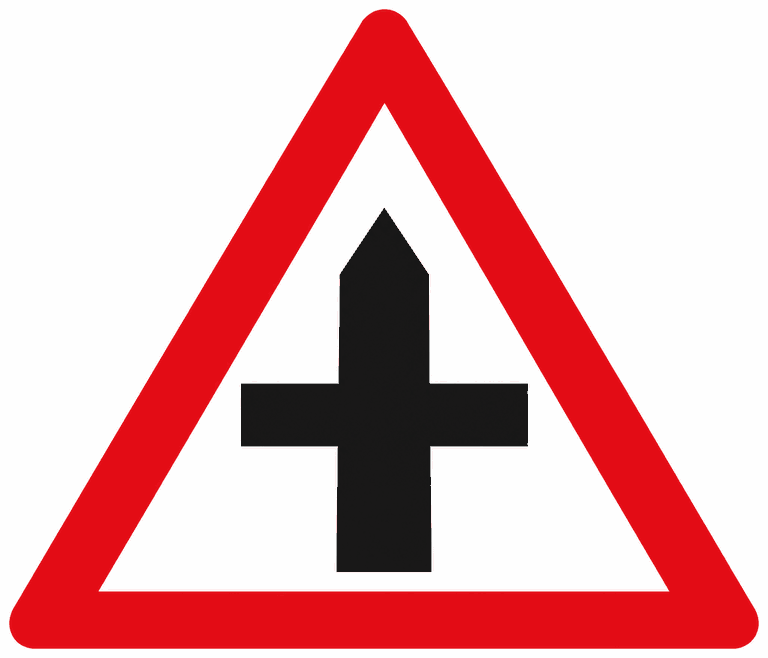
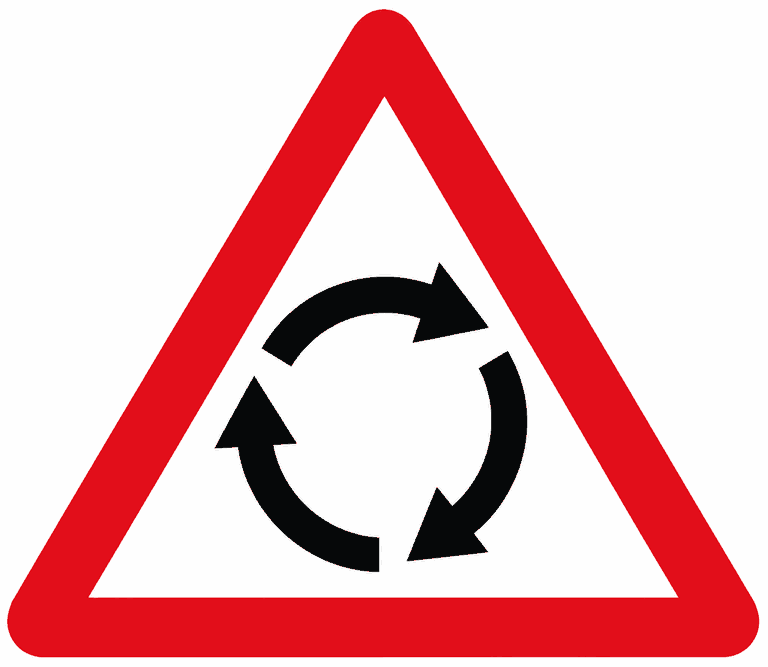
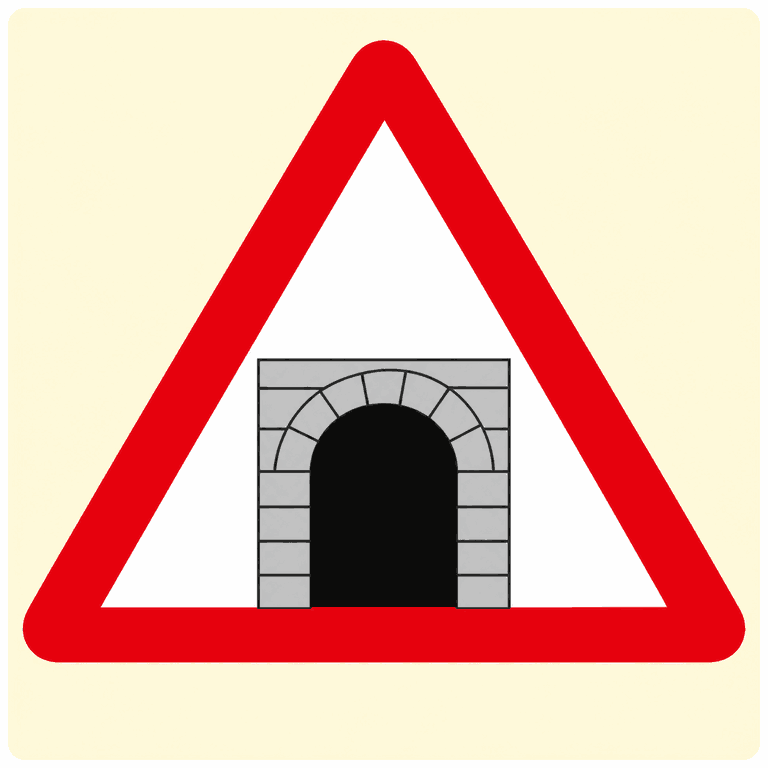
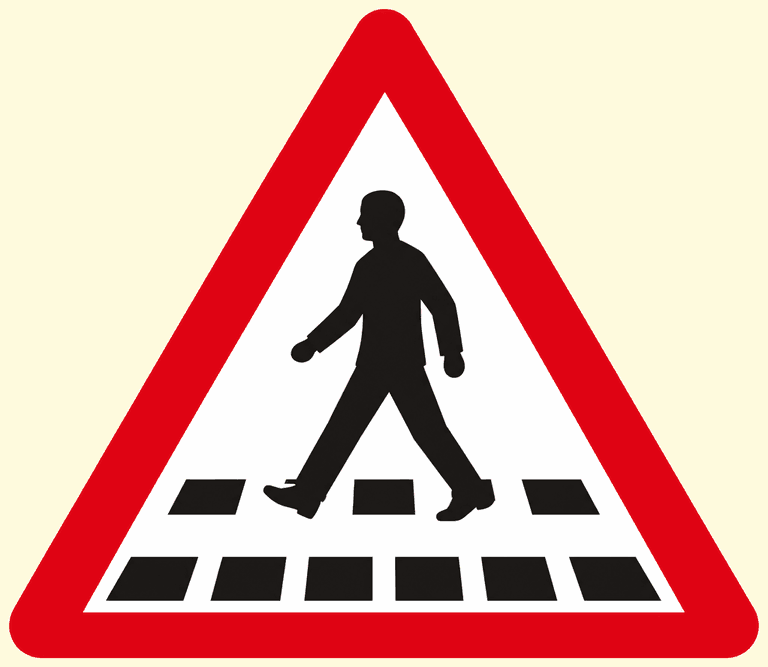
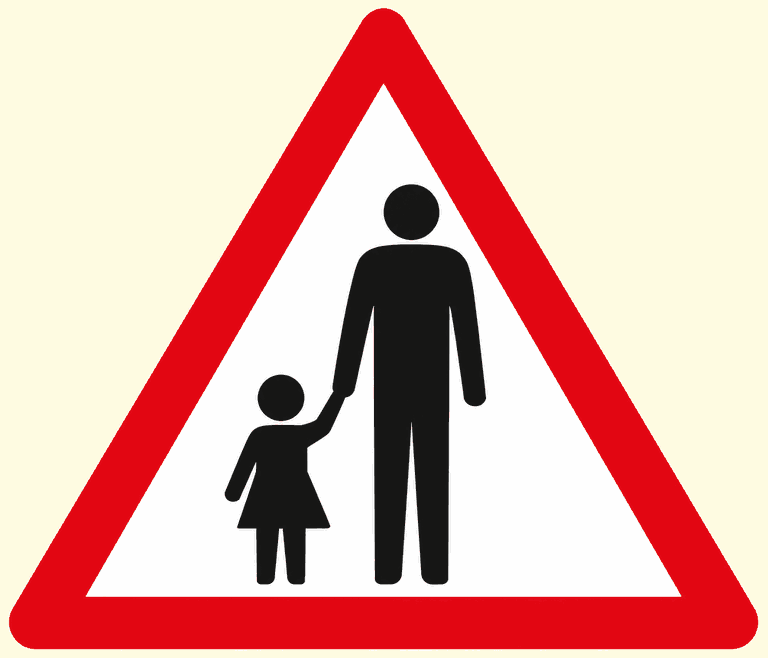
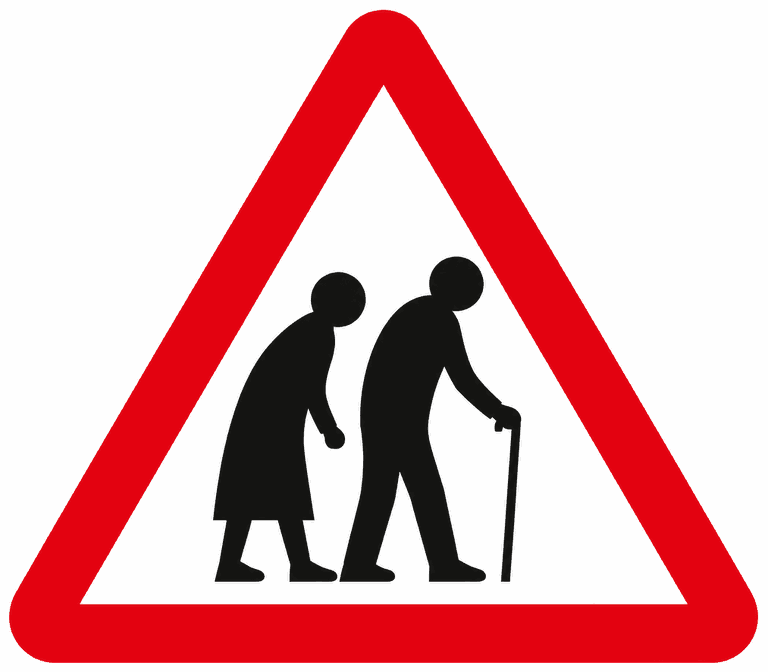
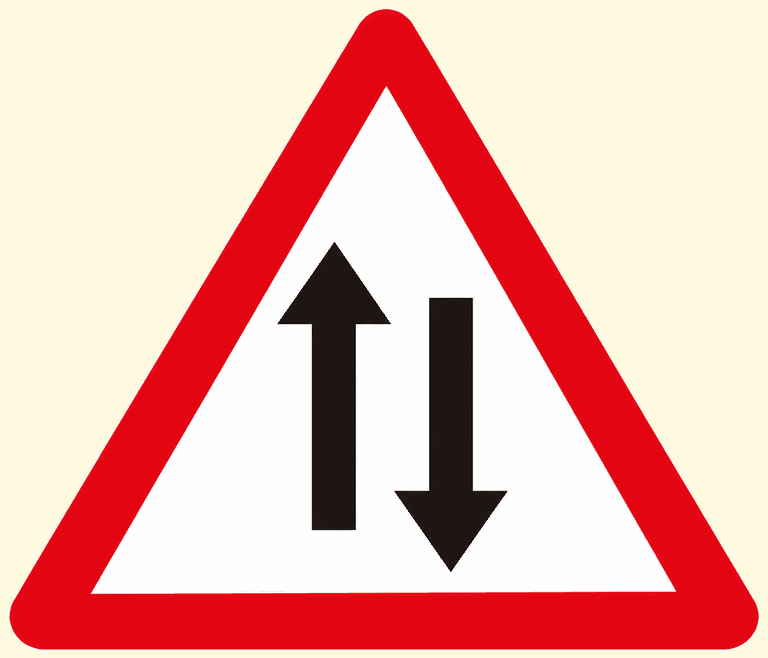
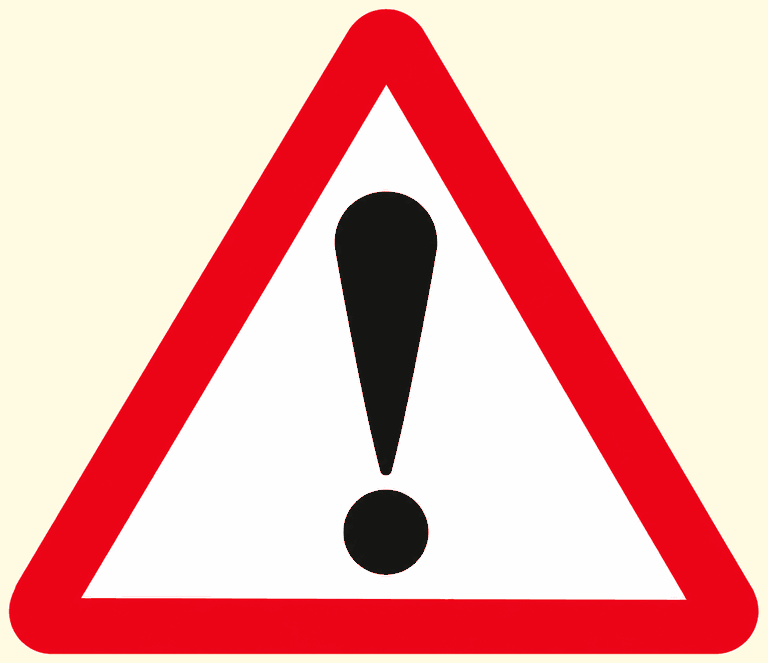
Notice that a warning sign never orders you to do anything. It reports. The action is yours: slow, look, be ready to stop.
Regulatory signs: the signs that give orders
Regulatory signs are the ones with legal force: they tell you what you must do or must not do. Malta's set covers: Stop and Give way; No entry and No U-turns; No overtaking, No parking, No stopping; No use of horn or motor noise; Maximum speed and Minimum speed; Keep left, Keep right; Roundabout; Turn left, Turn right, Drive straight, Pass either side; No motor vehicles, No trucks, No bicycles, No pedestrians; Maximum width, Maximum height, Maximum weight.
One honest limit on this section: the Maltese-language catalogue cited here does not carry the Maltese names for the prohibitory signs, meaning Stop, Give way, No entry, No U-turns and their like. So they appear here in English only. The Maltese column is left empty rather than filled with a term no official source uses.
For revision, the regulatory group is where the priority signs sit, Stop and Give way and the roundabout rule, and priority is the group that decides who moves first at a junction. If you are short of time, learn these before anything decorative.
Informational signs (sinjali informattivi) and the panels that qualify them
Informational signs guide rather than order. Malta's set includes:
| Sign | Maltese name |
|---|---|
| Priority road | Triq ta' prijorità |
| End of priority road | Tmiem it-triq prijoritarja |
| Priority over oncoming vehicles | Prijorità fuq vetturi ġejjin minn quddiem |
| No through road | Triq bla ħruġ |
| Parking | Parkeġġ |
| Hospital | Sptar |
| Locality | Lokalità |
| Direction sign | Sinjal tad-direzzjoni |
Two of those are drawn below. Both are blue, which is the colour to read first: a blue sign guides you, it does not forbid anything.
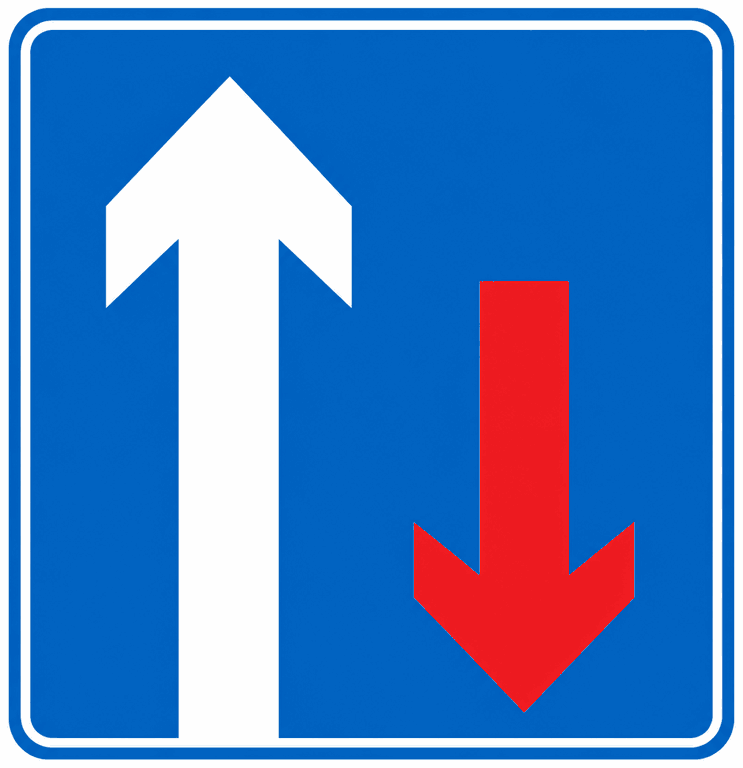
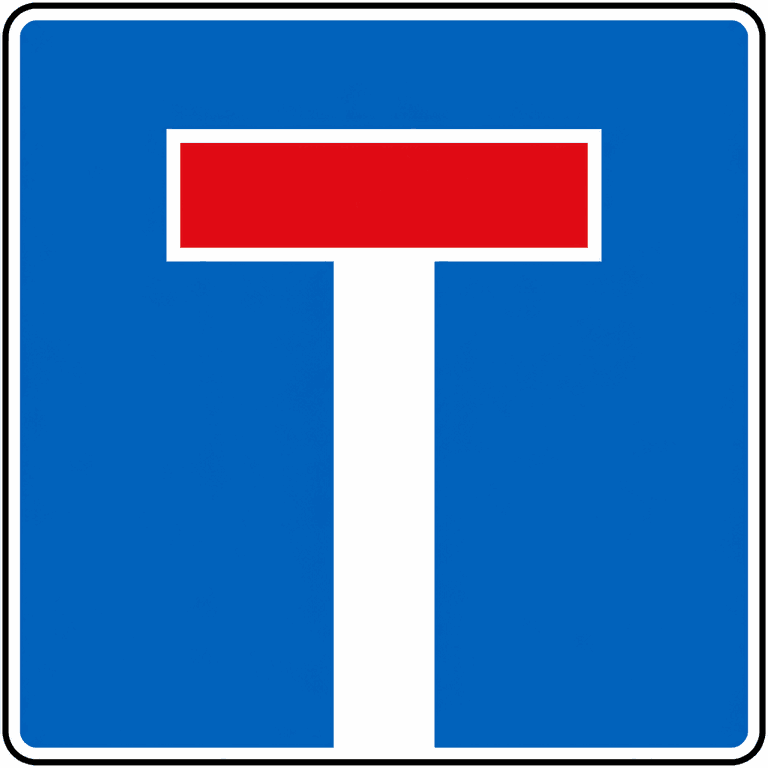
Additional panels are the small plates that qualify the sign above them.
| Panel | Maltese name |
|---|---|
| Distance | Distanza |
| Stop ahead | Ieqaf aktar 'il quddiem |
| School | Skola |
| Playground | Bitħa tal-logħob |
| Blind people | Persuni għomja |
| Disabled people | Persuni b'diżabilità |
A distance panel looks like this. It carries no symbol, only a distance, and it means the hazard named by the sign above it runs for that far.
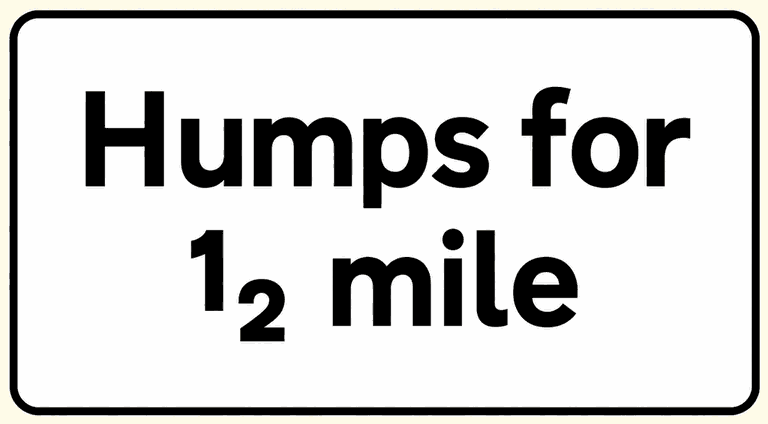
Directional signs use the Transport typeface. And because Malta's signs are British-based while signs in the Italian design are also present here, some of them mirrored for Malta's left-hand traffic, you can meet two different signs doing the same job, occasionally on the same street. That is a real feature of Maltese roads, not a mistake to resolve.
Why the set looks inconsistent, and why that is not your problem to solve
Three things on Maltese roads confuse learners, and none of them is an error: 1. Two designs, one function: British-model and Italian-model signs coexist, sometimes simultaneously, for the same job. 2. A third shape appears occasionally: diamond-shaped warning signs, similar to those used in Ireland, can be encountered without any official status. 3. Older designs are still on the road, because signs are amended over time, so a sign you meet may predate the current set.
None of that changes what a sign means for your test. Learn the group, then the symbol, and the odd-looking sign still answers itself.
How to revise the set, and where the official material is
Revise in groups, not as one long list. Warning: hazard ahead. Regulatory: an order you must obey. Informational: guidance. Panel: it changes the sign above it. A question that shows you a sign you have not memorised is usually answerable from the group alone.
Then revise against the official material. The Highway Code is Malta's official road-user guide and includes information on road signs and road markings; Transport Malta publishes the theory-test question banks in English and Maltese for cars (Karrozzi), motorcycles (Muturi) and the larger categories. The exam that uses this material is 35 multiple-choice questions in 45 minutes, and you need 30 correct to pass. The sign questions sit inside that, so signs are core marks, not a side topic.
Two sourcing notes, so you can check us. The legal instrument is cited as SL 65.5; the consolidated text is served as a PDF, so no clause from it is quoted on this page. And a competitor page is never a source for a Maltese rule; it only tells you a gap exists.
Frequently asked questions
How many road signs are there in Malta?
No official count of individual signs is published, and you should be sceptical of any page that gives one. What is published is the structure: four groups (warning, regulatory, informational and additional panels) and the exam format of 35 questions with 30 correct to pass. Learn the groups, not a number.
Are Malta's road signs the same as UK road signs?
They are based on the UK signs, with minor exceptions: Malta uses the metric system for speed limits and distances. The familiar shapes and colours mostly transfer, but study Malta's own set rather than assuming the two are identical.
Why do I sometimes see two different signs for the same thing?
Because Malta's signs are British-based and Italian-design signs also exist here, some mirrored for left-hand traffic. Two designs for one function, sometimes used at the same time, is a real feature of Maltese roads.
Do Malta's signs follow the Vienna Convention?
No. Malta is not a signatory to the Vienna Convention on Road Signs and Signals, although its signs generally conform to the pattern used by many other European countries. Several English-language study guides say otherwise; they are wrong.
Can I revise the signs in Maltese?
Yes. The Maltese sign names on this page are the ones in the Maltese catalogue, and Transport Malta publishes the question banks in English and Maltese. Learning Qsim taż-żebra beside "zebra crossing" is the same mark from a second angle, not extra work.
Do I need road markings as well as signs?
The Highway Code, Malta's official road-user guide, covers road markings alongside road signs and road safety. Treat markings as part of the same subject.
Want to find out which signs you actually know?
Try 10 real questions with no account, or run a full 35-question mock in the official format and see the sign groups you are weak in. Everything here comes before the exam itself, so start from the homepage if you want the whole picture.
Sources
- Traffic Signs and Carriageway Markings Regulations, Subsidiary Legislation 65.5, legislation.mt, point in time 24/05/2024. The legal instrument that regulates traffic signs and carriageway markings in Malta. Its consolidated text is served as a PDF, so no clause from it is quoted on this page.
- Wikipedia (English), "Road signs in Malta" (last edited 12 May 2026). Source for: signs regulated by the Traffic Signs and Carriageway Markings Regulations and standardised by Transport Malta; signs based on the United Kingdom's, with the metric system for speed limits and distances; Italian-design signs also present, some mirrored for left-hand traffic, two designs coexisting for one function; occasional unofficial diamond-shaped warning signs; directional signs using the Transport typeface; Malta not being a signatory to the Vienna Convention on Road Signs and Signals; and the sign catalogue and English sign names listed in this guide.
- Transport Malta, "Technical guidelines of traffic signs", "Driver Education" and "The Highway Code". Cited location: the Wayback captures of 30 Sep 2020, 20 Sep 2020 and 23 Oct 2012. Source for: the Roads and Infrastructure Directorate's procedure for selecting and installing vertical traffic signs; the Highway Code being Malta's official road-user guide and covering road signs, road markings and road safety. The Highway Code itself is a PDF, so its contents are not quoted. Archived copy.
- Transport Malta, "Obtaining your driving licence". Cited location: the Wayback capture of 2026-02-17. Source for: the test taking 45 minutes, being 35 multiple-choice questions, and requiring 30 correct answers to pass; and the official question banks published in English and Maltese for Cars (Karrozzi) and Motorcycles (Muturi) among others. Archived copy.
- Wikipedia (Maltese), "Sinjali tat-toroq f'Malta". Source for the Maltese sign names used on this page: Liwja lejn ix-xellug, Liwja doppja, Triq imdawwra, Salib it-toroq mingħajr prijorità, Rawndabout, Mina, Triq irregolari, Qsim taż-żebra, Żona tal-iskola, Xogħlijiet fit-toroq, Persuni mexjin, Anzjani jaqsmu, Blat li jaqa', Traffiku f'żewġ direzzjonijiet, Għoli massimu, Dwal tat-traffiku, Ajruplani li jtiru baxxi, Twissija dwar l-elettriku, Tratturi, Ekwestri, Periklu ieħor, Triq ta' prijorità, Tmiem it-triq prijoritarja, Prijorità fuq vetturi ġejjin minn quddiem, Triq bla ħruġ, Parkeġġ, Sptar, Lokalità, Sinjal tad-direzzjoni, Distanza, Ieqaf aktar 'il quddiem, Skola, Bitħa tal-logħob, Persuni għomja, Persuni b'diżabilità. This source does NOT list the prohibitory/regulatory names in Maltese, so those signs appear on this page in English only.
- UK Department for Transport, The Highway Code, "Traffic signs" (GOV.UK). Cited only for the shape-and-colour grammar of the sign system Malta's signs are based on: signs with red circles are mostly prohibitive; plates below signs qualify their message; signs with blue circles but no red border mostly give positive instruction; warning signs mostly triangular; direction and information signs rectangular. This is UK guidance, not Maltese law, and is not cited for any Maltese rule.
- examready.app/guides/malta-road-signs, a foreign aggregator guide. Cited only as the competitor that asserts Malta "follows the European (Vienna Convention) style", which is wrong. Not a source for any fact.